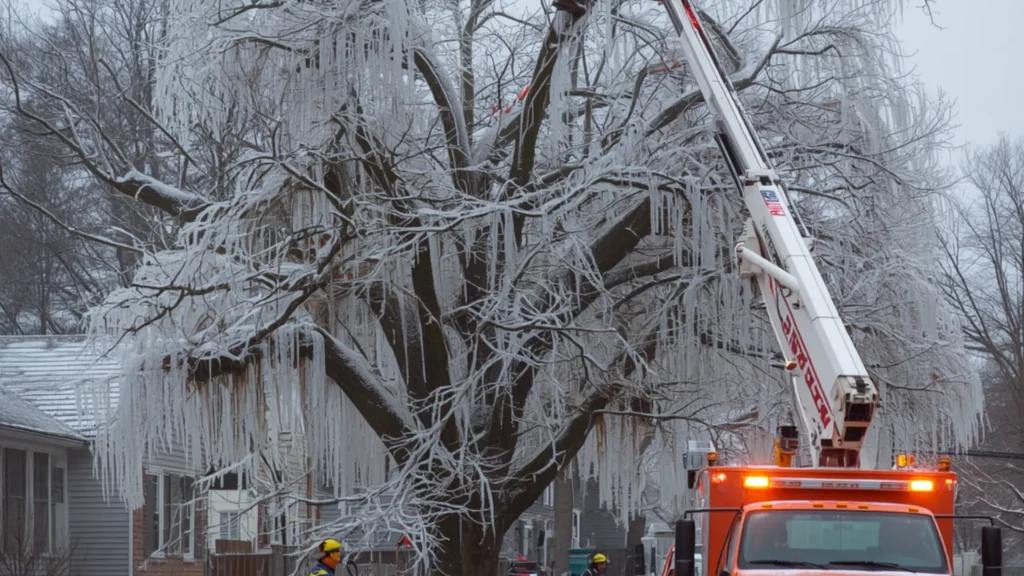
While summer thunderstorms and sudden microbursts certainly take a toll on Monroe County, nothing tests the structural integrity of Western New York’s urban canopy quite like a brutal winter freeze. The combination of sustained freezing rain, heavy lake-effect snow, and biting winds off Lake Ontario can transform stable, mature trees into hazardous weight liabilities in a matter of hours. When thousands of pounds of ice accumulate on fragile branches, a sudden collapse isn’t just a possibility—it becomes inevitable.
When winter weather compromises your landscape, leaving heavy limbs resting precariously over your roofline or blocking emergency access routes, you cannot afford to wait out the storm. You need a team equipped to handle freezing heights and complex rigging under hazardous conditions.
At Cut & Trim Tree Services, we offer the highly specialized emergency tree removal Rochester NY relies on during seasonal crises. Operating as a dedicated 24/7 emergency tree service rochester ny provider, our crews are permanently on standby to clear hazards, protect local properties, and restore safety to your neighborhood when winter weather strikes.
The Physics of Winter Tree Failures: Why Freezing Weather is Dangerous
Winter tree emergencies operate under a completely different set of physical dynamics than summer storm damage. Understanding why trees fail in freezing temperatures can help you spot hazards before they cause catastrophic property damage.
1. The Catastrophic Weight of Ice Accumulation
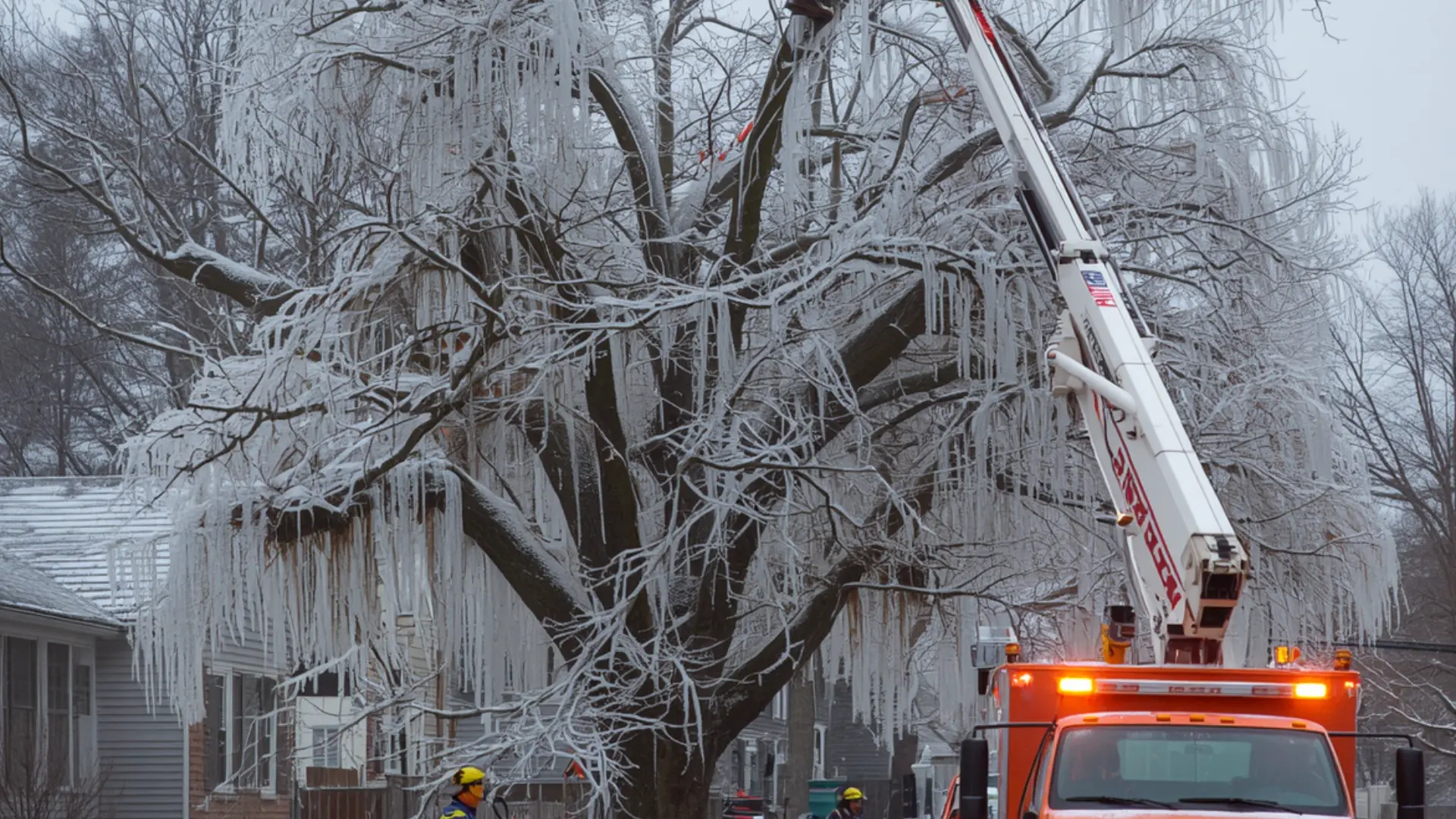
Ice accumulation is incredibly deceptive. A mere half-inch of ice glaze can add up to 30 times more weight to a tree’s branches than its normal summer foliage. This immense load places extreme vertical and lateral pressure on forks and limbs, causing sudden, explosive fractures.
2. Frozen Wood is Brittle Wood
As temperatures plummet well below freezing, the remaining sap and moisture inside a tree’s vascular system freeze. This crystallization process makes the wood fibers highly brittle and significantly less flexible. Lacking the ability to bend and sway with high winds, frozen branches snap like glass under minimal pressure.
3. Saturated, Unfrozen Ground Shifts
Early winter storms often bring heavy snow or torrential rain before the ground completely freezes solid. When the soil becomes deeply saturated and mushy, the root plates of massive trees lose their structural grip, allowing strong winds to easily uproot mature trees.
Local Focus: High-Risk Zones in the Greater Rochester Area
Managing winter tree failures requires deep familiarity with local geography and architectural layout. Rochester’s oldest and most scenic neighborhoods feature high concentrations of massive silver maples, weeping willows, and ancient oaks—species that are highly susceptible to ice splitting.
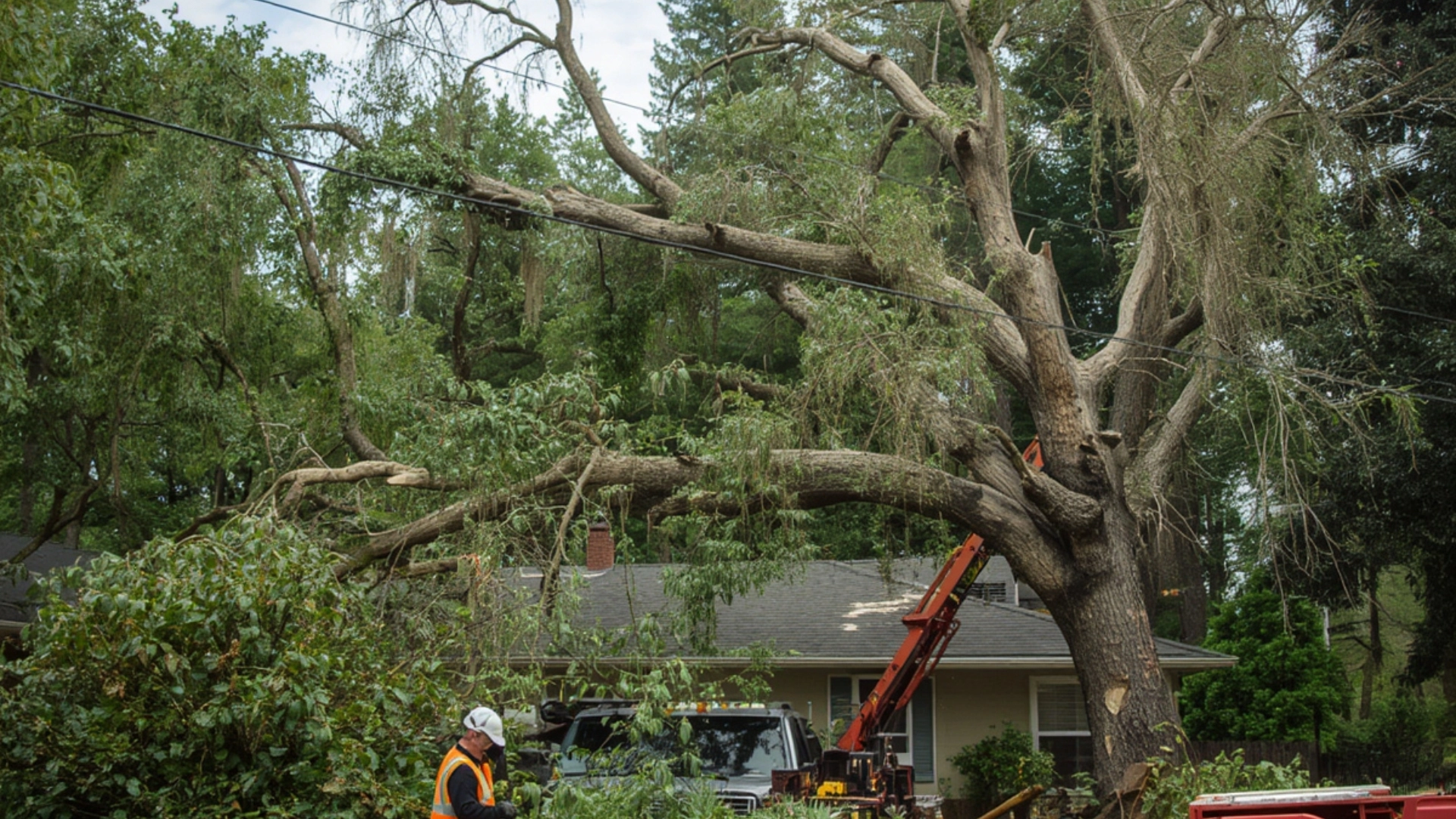
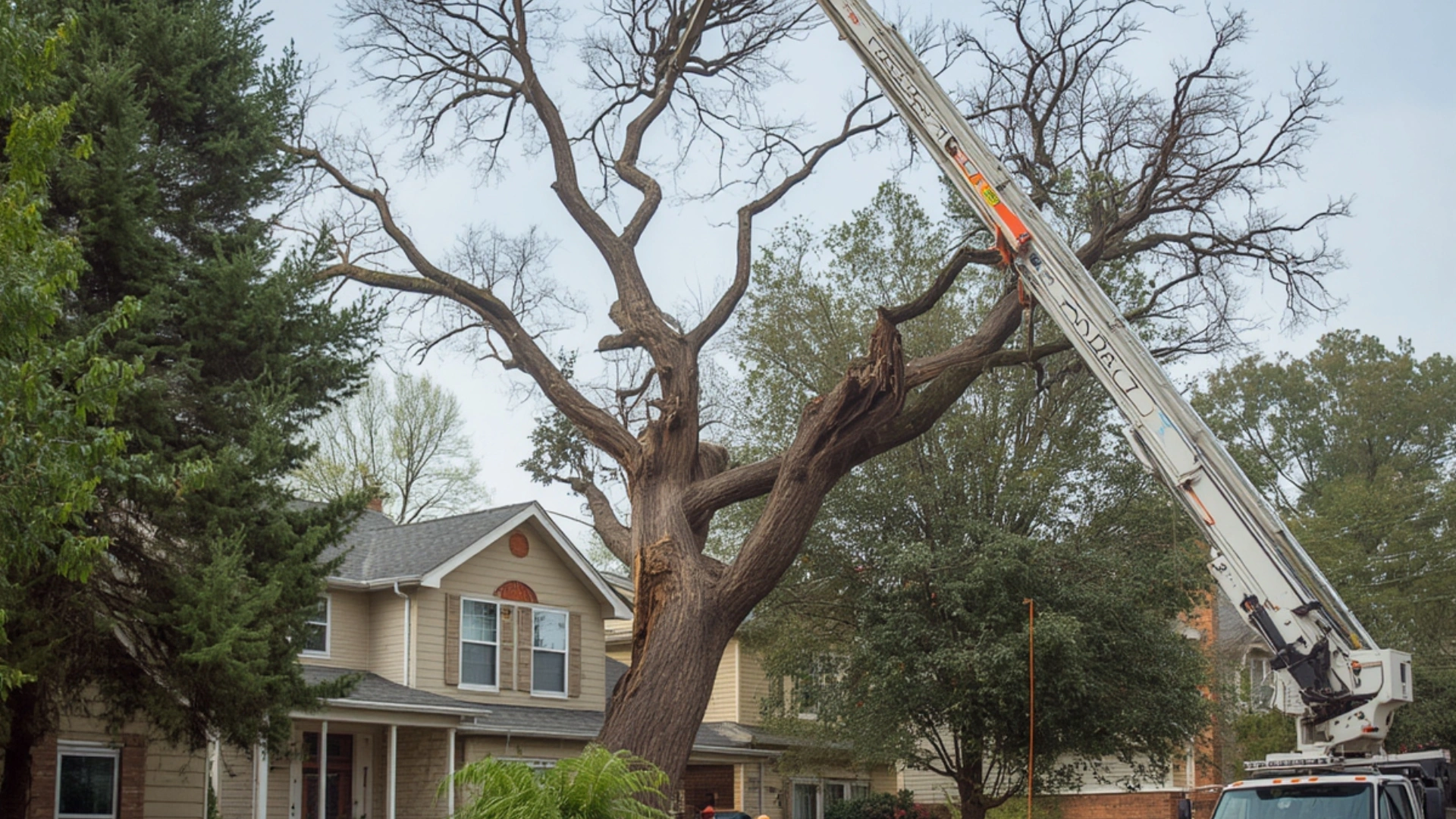
Consider a winter storm that drops an inch of pure ice right across the historic properties neighboring Park Avenue. The tight spacing between residential homes, combined with overhead utility corridors and narrow, vehicle-lined streets, creates an incredibly high-stakes environment. If a massive, ice-laden branch shears off a mature maple, it can easily bridge across property lines, taking down power lines and pinning a vehicle beneath it. Navigating a tight-quarter clearance like this requires specialized compact lifts, commercial cranes, and precision technical rigging. This is where our seasoned professionals step in to perform the emergency tree removal Rochester NY homeowners count on to secure vulnerable residential structures safely.
The Crucial Reasons to Avoid DIY Winter Tree Clearance
When a tree snaps under the weight of ice or snow, your immediate impulse might be to clear the blockage yourself. However, attempting DIY tree removal during freezing weather is an invitation to severe injury:
- Treacherous Underfoot Conditions: Working with a heavy, vibrating chainsaw on icy, uneven terrain dramatically increases the risk of slips, falls, and severe cutting accidents.
- Complex, Trapped Structural Shifts: Ice-damaged trees frequently get caught up in neighboring canopies, creating hidden “hangers.” Removing the wrong support branch can cause thousands of pounds of frozen timber to slide down unpredictably toward the operator.
- Invisible Power Grid Hazards: Heavy winter ice frequently snaps utility lines, burying live wires directly beneath the fallen tree canopy. Because ice and wet snow conduct electricity, touching a fallen limb that is in contact with a downed wire can be instantly fatal.
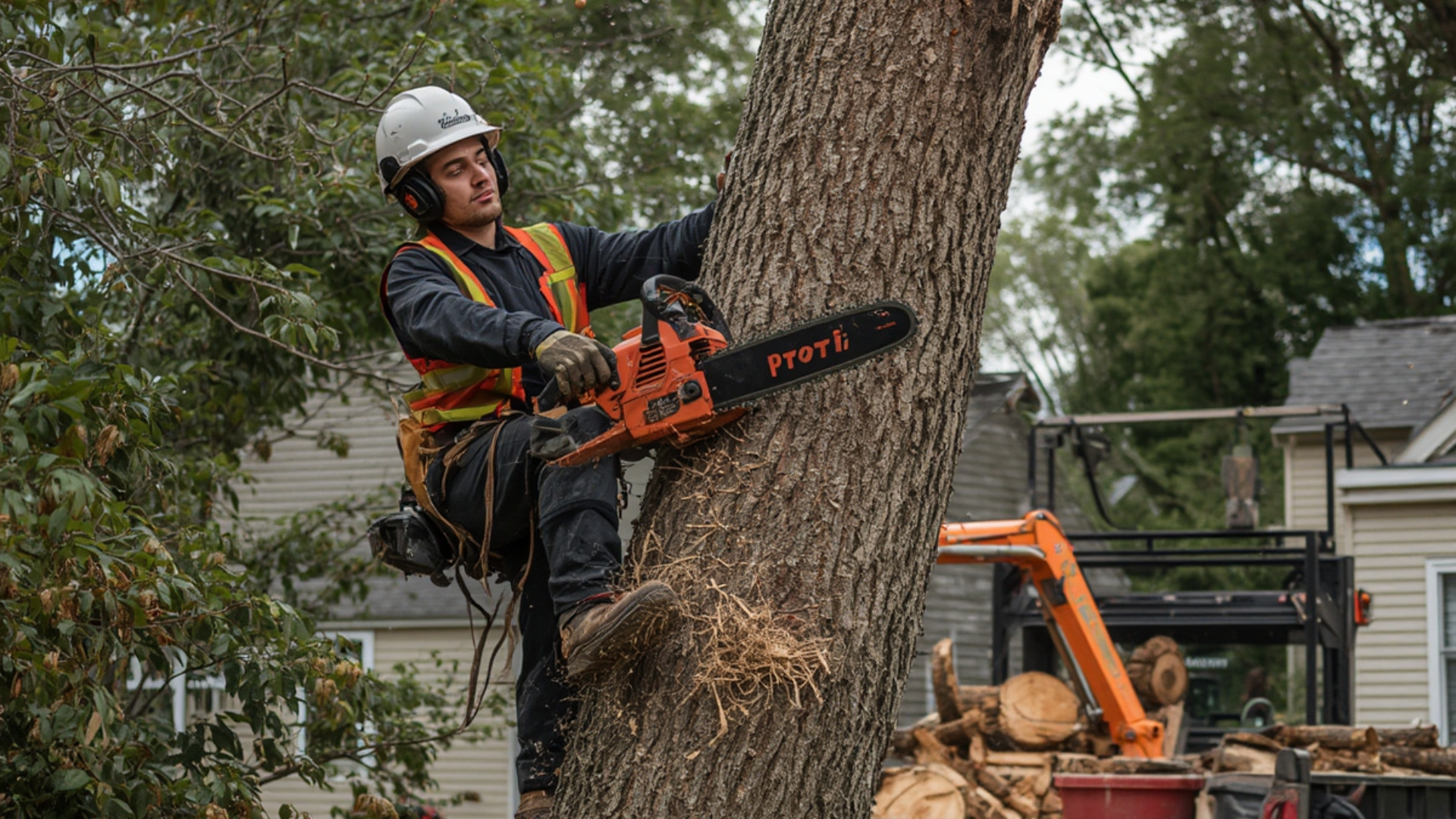
Professional crews utilize specialized personal protective equipment (PPE), non-slip climbing systems, insulated tools, and commercial-grade machinery to systematically neutralize winter hazards without endangering the surrounding property.
Emergency Protocol: What to Do When a Tree Fails
If a tree structural failure occurs on your property during a winter storm, follow these safety steps immediately:
- Establish a Safe Perimeter: Evacuate any rooms directly underneath or adjacent to the impacted area. Keep family members and pets entirely clear of the yard.
- Photograph the Scene Safely: From a safe indoor vantage point or a secure distance, document the tree failure, structural damage, and current weather conditions with clear photographs.
- Notify Emergency Services and Utilities: If the tree has taken down live wires, contact Rochester Gas & Electric (RG&E) immediately.
- Deploy a 24/7 Emergency Tree Service Rochester NY Professional: Call Cut & Trim Tree Services. Our emergency crews will deploy to stabilize the site, prevent further structural collapse, and clear the hazard systematically.
Frequently Asked Questions (FAQ)
Q1: Can a tree that has split from ice accumulation be saved?
A: If a tree suffers a minor branch fracture, it can typically be saved through corrective pruning come springtime. However, if the main trunk splits open or a primary co-dominant stem tears away at the center fork, the tree’s structural core is permanently compromised and must be removed for safety.
Q2: Does homeowners insurance cover the cost of removing trees fallen by winter storms?
A: Yes, if the tree damages a covered structure (your home, garage, or fence), standard policies will cover the extraction costs. If the tree falls harmlessly in an open lawn area without causing structural property damage, it is classified as general maintenance and is typically paid out of pocket.
Q3: How do your crews operate safely in icy, freezing conditions?
A: Our safety protocols are adapted for winter operations. We utilize specialized tracking mats for heavy equipment, ice-spikes for climbing boots, and sophisticated crane-assisted removals that allow us to lift heavy frozen logs vertically away from your home without sliding or rolling.
Q4: Are evergreen trees more vulnerable to winter storm damage than deciduous trees?
A: Yes. Because evergreen trees (like pines, spruces, and firs) retain their needles year-round, they collect significantly more surface area of heavy snow and ice than leafless deciduous trees, making them highly prone to catching winter winds and uprooting.
Q5: What should I do if a city-owned tree on the street easement falls onto my driveway?
A: If the tree blocks a public right-of-way or driveway access, notify the city immediately. However, if the city response is delayed due to widespread storm chaos, Cut & Trim Tree Services can be hired to immediately clear the private property portion of the blockage to restore your vehicle access.